Tubular Locks: Circle Keys and Vending Security
The tubular lock arranges pin tumblers in a circle around a central rod, operated by a round "ace" key with corresponding cuts around its tip. The format packs a cylinder into a small face — ideal for vending machines, computer cases, and glass display cabinets.
Often mistaken for high security because of its unusual appearance, standard tubular locks are vulnerable to specialized tubular picks once attackers understand the layout.
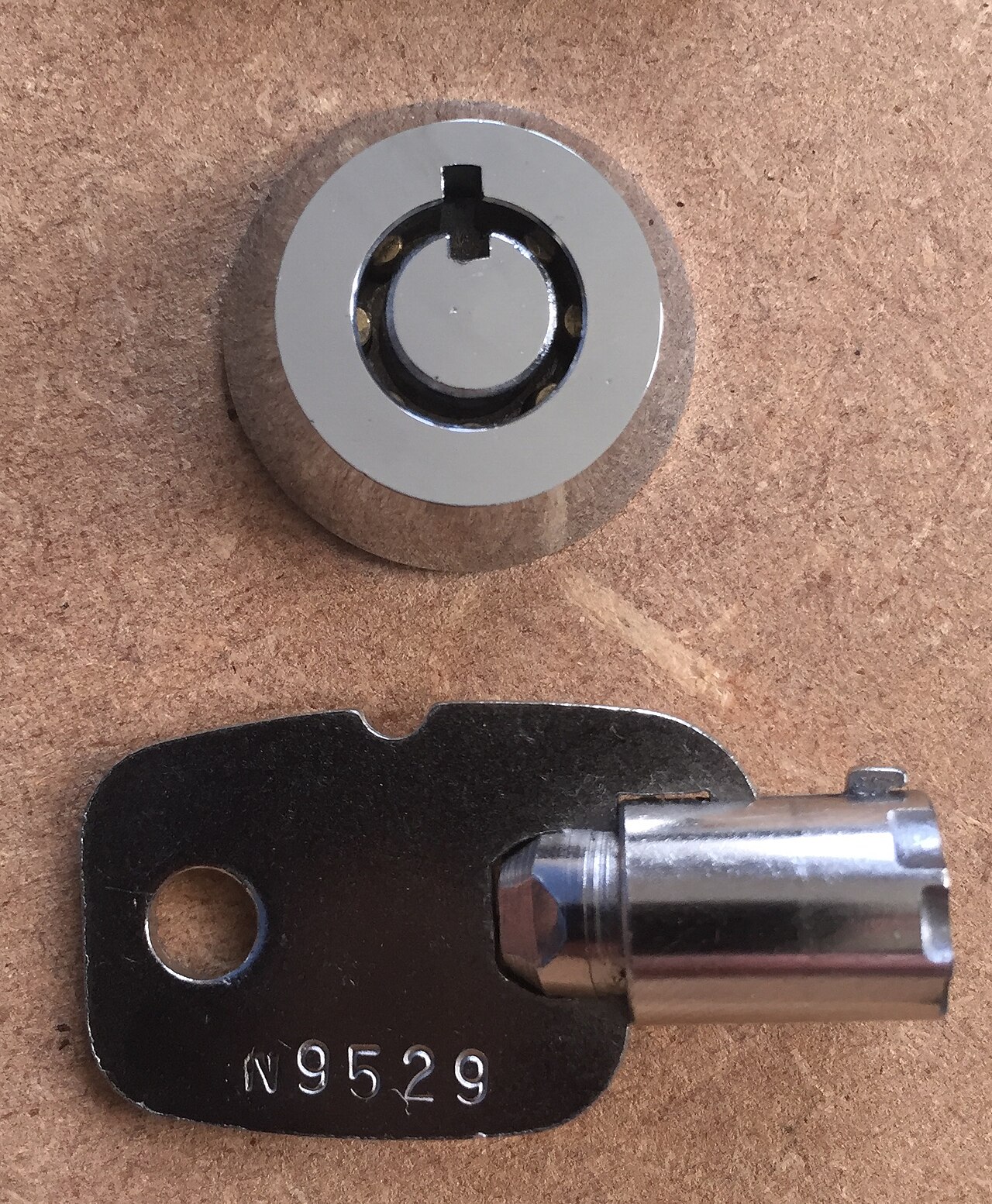
Mechanism
Pressing the key lifts each radial pin to the shear line simultaneously. Springs return pins when the key is removed. Variants include 7-pin and 8-pin sizes with different diameters — not interchangeable.
Common Applications
Snack machines, arcade cabinets, RV compartments, and cheap bike locks. Manufacturers like National and Chicago Lock (historically) standardized sizes across industries.
Security Reality
Tubular lock picks and guides are widely sold to locksmiths for legitimate servicing. Security through obscurity failed here: unusual shape does not equal strong defense. Upgraded tubular models add sidebar or pick-resistant drivers.
Servicing Notes
Locksmiths decode tubular locks by impressioning or reading pin heights with gauges. Replacement cores are inexpensive — owners often replace rather than rekey.
Relation to Bramah
Joseph Bramah's early cylindrical key concept influenced later radial layouts, though modern tubular locks are a separate evolutionary branch optimized for miniaturization.