Mesopotamian Locks: Pin Tumblers at Khorsabad
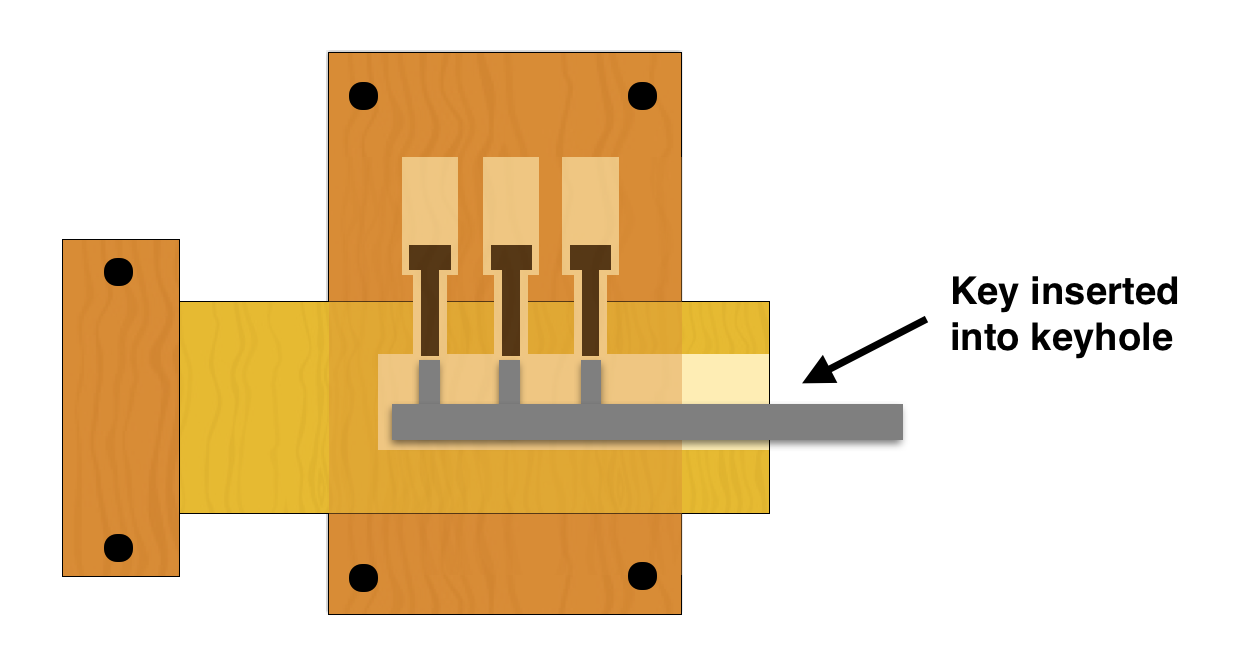
While Egypt is famous for early wooden pin tumblers, one of the best-preserved early examples was discovered at the Palace of Khorsabad (Dur-Sharrukin), built for Assyrian king Sargon II around the 8th century BCE. The lock mechanism used a wooden bolt and pin chambers strikingly similar to later Egyptian and modern designs.
Mesopotamian innovation occurred in a crucible of urban trade, temple administration, and imperial bureaucracy — all requiring access control to storerooms and archives.
Discovery at Khorsabad
French excavations in the 19th century recovered lock components from the palace complex near modern Khorsabad, Iraq. The bolt contained several pin holes; the key featured raised pegs matching pin lengths — the same alignment principle as the shear line, though implemented in wood and without a rotating plug.
Administrative Need for Security
Assyrian palaces stored tribute, craft goods, and cuneiform records. Controlling access was governance. Locks supplemented guards and sealed doors, especially for inner storerooms where valuables accumulated from across the empire.
Materials and Craft
Wood and bronze dominated. Metal keys sometimes accompanied wooden bolts. Climate and warfare destroyed most examples; Khorsabad survives in texts and fragments because it was abandoned relatively soon after Sargon's death, preserving layers for archaeologists.
Relationship to Egyptian Designs
Scholars debate whether pin tumbler ideas spread from Egypt to Mesopotamia or arose independently. Trade along the Levant connected both regions by the Bronze Age. Functional convergence — needing portable, resettable access control — likely drove similar solutions.
Modern Significance
The Khorsabad lock anchors patent arguments and historical articles about prior art: pin tumblers are not a 19th-century American invention but a human solution at least 2,700 years old. See also our Egyptian locks article for parallel development.