Linus Yale Sr. and Linus Yale Jr.: Fathers of the Modern Pin Tumbler
Few names in locksmithing carry the weight of Yale. Father and son — Linus Yale Sr. (1797–1858) and Linus Yale Jr. (1821–1868) — took an idea thousands of years old and engineered it into the compact cylinder lock that still secures homes, offices, and vehicles worldwide.
Their work sits at the intersection of craft and industrial manufacturing. Yale Sr. began as a portrait painter and inventor in Newport, New York, experimenting with bank locks before turning to pin tumblers. Yale Jr. refined the design, founded a manufacturing empire, and died at the height of his influence — yet the mechanism he perfected remains the default mental image of what a lock is.
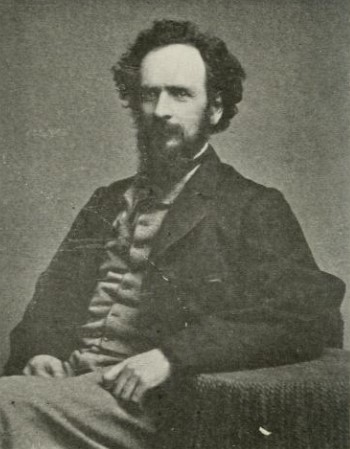
Early Life and Yale Sr.'s First Patents
Linus Yale Sr. moved from decorative arts into security engineering after observing the limitations of large, warded bank locks. In 1844 he patented a pin tumbler lock for banks, using a flat key and spring-loaded pins — a significant departure from bulky lever designs.
His 1848 patent improved the concept with a cylindrical plug and more reliable pin stacks. Though still used mainly in high-value commercial settings, the design demonstrated that pin tumblers could be both compact and resistant to casual manipulation — qualities that would define residential security a generation later.
Yale Jr. and the 1861 Revolution
Linus Yale Jr. studied his father's work and patented further refinements in 1861, producing the familiar pin tumbler cylinder with a serrated flat key. The key bitting lifted pins of varying lengths until all gaps aligned at the shear line, allowing the plug to rotate.
The Yale Jr. design offered thousands of usable key combinations in a package small enough for domestic doors. Partnering with Henry Robinson Towne, he formed the Yale Lock Manufacturing Company in Stamford, Connecticut (later Yale & Towne), scaling production for a mass market.
Manufacturing and Global Spread
Yale & Towne became one of the largest lock makers in the world, exporting cylinders to Europe and influencing national standards for rim and mortise hardware. The company's success paralleled urban growth in the United States: apartment buildings, offices, and railroad equipment all needed affordable, replaceable locks.
After Yale Jr.'s death in 1868, Towne continued expansion. The Yale name became so synonymous with pin tumblers that many languages use "Yale" generically for cylinder locks — much as "Kleenex" stands for tissue.
Technical Legacy
Modern pin tumblers still follow Yale Jr.'s core principles: spring-loaded pin stacks, a rotating plug, and bitting that aligns shear points. Innovations since — security pins, sidebar mechanisms, anti-drill plates, and smart-cylinder electronics — are layers on top of the 1861 foundation.
Master keying, interchangeable cores, and high-security restricted keyways all assume a Yale-style pin chamber. Even locks marketed as "bump proof" or "pick resistant" usually retain the pin tumbler architecture Yale popularized.
Fun Fact: From Portraits to Pin Stacks
Before locks made the family famous, Linus Yale Sr. earned recognition as a portraitist. His artistic eye for proportion may have influenced the elegant slimming of lock hardware — proof that locksmithing has always drawn talent from unexpected places.