Jeremiah Chubb and the Detector Lock
Jeremiah Chubb (1793–1872) was an ironmonger from Portsmouth whose 1818 detector lock won a government-sponsored competition after a staged burglary failed to defeat it. The lock not only resisted entry — it showed that someone had tried.
Chubb Locks became a household name in Britain, guarding banks, royal mail, and government buildings. The detector principle influenced insurance requirements and public trust in lever locks for generations.
The 1817 Dockyard Competition
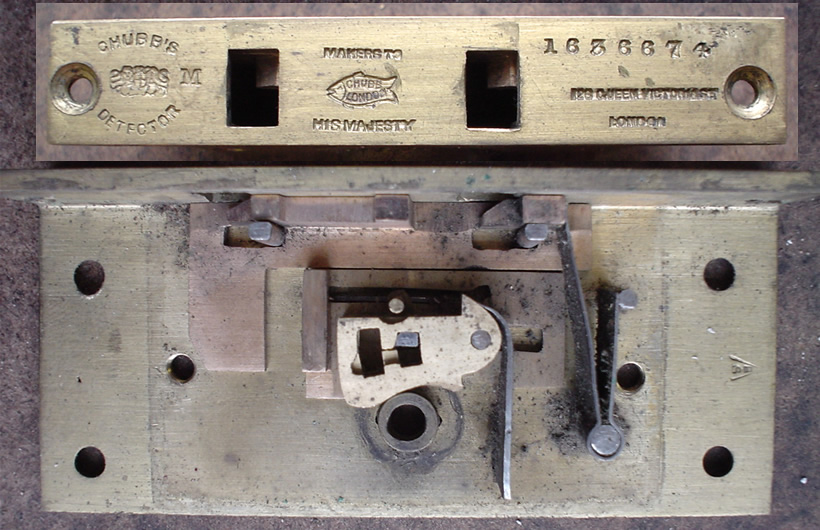
After a series of dockyard thefts, the British government offered a reward for a lock that could resist unauthorized opening and reveal attempts. Chubb's brother Charles had already worked on lever designs; Jeremiah refined a lock that engaged a detector lever when any tumbler was lifted incorrectly, jamming the mechanism until a special reset key was used.
How the Detector Worked
In normal operation, the user key lifted lever tumblers to align gates with the bolt stump. If a picker lifted one lever too far, a detector component seized the bolt and typically raised a visible indicator on the lock face.
Even if the attacker later withdrew tools, the lock remained jammed — denying entry and alerting the owner. This was revolutionary: security was no longer only about prevention, but about accountability.
Commercial Growth
Chubb & Son Lock & Safe Co. expanded into safes, strongrooms, and time locks. The name "Chubb" became shorthand for serious security in Commonwealth countries. Competitors imitated detector features, but Chubb's early patent advantage and government endorsements sustained market leadership.
Relationship to Barron and Hobbs
Chubb's levers built on Barron's double-acting concept. When Alfred Hobbs picked Chubb and Bramah locks at the Crystal Palace in 1851, Chubb responded with improved models — an arms race that benefited the entire industry's understanding of attack methods.
Legacy Today
Modern high-security locks still use detent and clutch mechanisms that freeze when sensing manipulation. While few advertise a visible "detector," the idea that a lock should enter a failure-secure state after tampering traces directly to Chubb's 1818 insight.