James Sargent: Combination Locks and the Vault Time Lock
James Sargent (1828–1915) co-founded Sargent & Greenleaf, a name still printed on vault hardware. He patented magnetic combination lock improvements and, in 1857, the time lock — a clock-driven mechanism that prevents a safe from opening until a preset hour, even if the combination is known.
Sargent's work shifted safe security from single-factor secrets (the combination) to layered controls involving time, personnel, and dual custody — concepts central to modern banking operations.
Early Career and Partnership
Born in Vermont, Sargent apprenticed in lockmaking and partnered with Halbert Greenleaf to manufacture bank locks in Rochester, New York. Their combination locks used dial-driven wheels to align internal gates — tolerances and false gates determined resistance to manipulation.
The 1857 Time Lock Patent
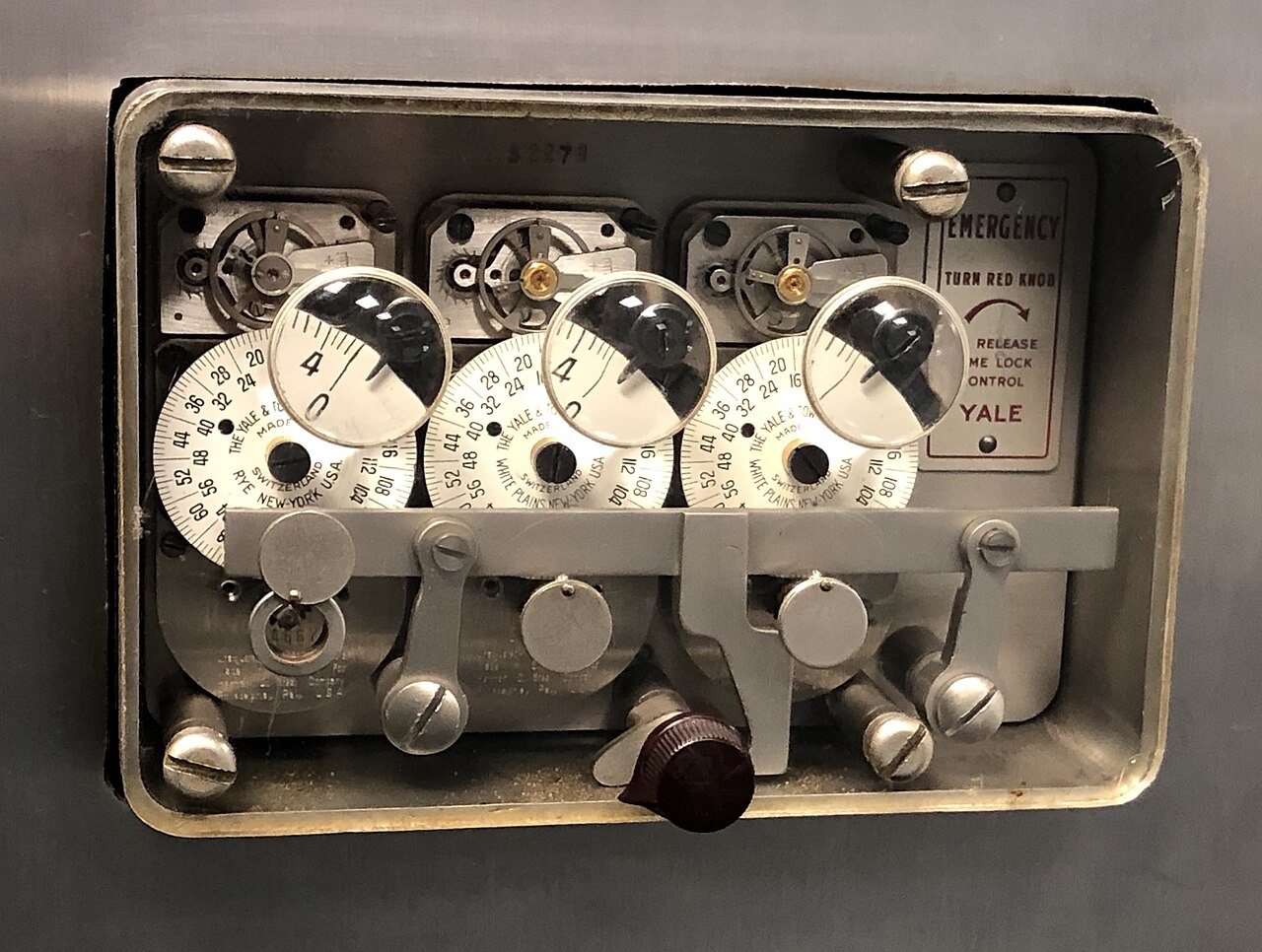
Bank robberies often involved forcing bankers to open vaults under threat. Sargent's time lock added a clock movement that blocked bolt retraction until the next authorized opening window — typically business hours.
Even with the combination, criminals could not immediately access cash. Multiple time locks on vault doors provided redundancy; see our time lock article for mechanical details.
Magnetic and Dial Innovations
Later Sargent patents incorporated magnets and more complex wheel packs to resist feel-based manipulation. S&G became the dominant OEM for vault time locks in the United States, with products specified by insurers and regulators.
Regulatory Influence
As national banks proliferated after the Civil War, time locks became standard equipment. Sargent's designs were studied in forensic courses when vaults failed or showed signs of tampering — linking locksmithing to criminal investigation.
Continuing Legacy
Electronic time delays in modern ATMs and timed lockouts on smart safes are descendants of Sargent's insight: sometimes the best security is simply making immediate access impossible, no matter what credentials an attacker possesses.